


- Products
- News & Events
- Successful Cases
- Client Visit


Main pump slipper failure in an excavator may sound highly technical, but it can be explained with a practical scenario. Imagine an excavator working on site when a sudden “clicking” or “tapping” abnormal noise appears from the hydraulic main pump area. The jobsite is far from a service center or spare parts supply, the schedule is tight, and extended downtime is not an option. However, continuing operation without diagnosis may lead to serious mechanical failure or even safety incidents.
In real-world troubleshooting, the following steps can be used to check whether the main pump piston slipper has broken or fallen off:
1. Start the machine and slowly lower the bucket to the ground. Park the excavator securely and ensure it is stable before inspection.
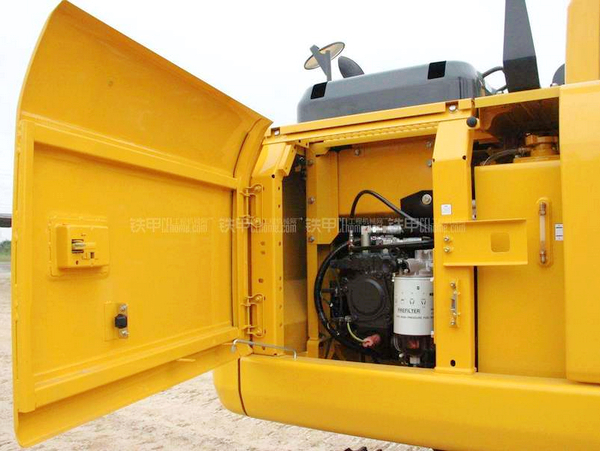
2. With the engine running at idle speed, remove the side cover of the hydraulic main pump. Locate the main hydraulic lines connecting the pump to the control valve.
3. Lightly hold the hydraulic pipe with one hand and use the other hand to sense the oil flow condition. Under normal conditions, hydraulic oil flow should feel smooth and continuous, with stable pressure output and no abnormal noise. If the flow feels pulsating, uneven, or accompanied by vibration and knocking sounds, this indicates abnormal operation.
4. Compare the hydraulic oil flow between the front and rear pump main lines. If the line connected to the front pump shows stronger vibration, unstable flow, and a noticeable “clicking” noise, it is highly likely that the main pump piston slipper has detached.
5. Stop the machine immediately and proceed with maintenance. Since hydraulic systems require a high level of cleanliness, move the excavator to a flat, dust-free area before disassembly. Most broken slipper fragments can usually be found during pump teardown. If debris enters the hydraulic system, it may cause further damage and significantly increase repair complexity.
This method provides an effective on-site
diagnostic reference for operators and technicians facing urgent field conditions.






+86-512-6929-1158
+86-512-6929-1158
+86-157-5556-5618
+86-135-6463-2264
Suite 705, Building 2, Tiandu Mansion, No. 211 Changjiang Road, High-tech Zone, Suzhou, Jiangsu Province, China


 Lifting Machinery
 Earthmoving Machinery
 Road Construction Machinery
 Concrete Machinery
 Truck & Special Vehicle
 Drilling Machinery
 Logistics Machinery
 Mining Machinery
 Agricultural Machinery
 Spare Parts
 Generator Set & Engine