


- Products
- News & Events
- Successful Cases
- Client Visit


Regardless of working conditions,
excavators inevitably face uphill and downhill operations. Although slope
driving is common, it requires proper skills and experience to ensure safety
and efficiency. Based on practical experience shared by seasoned operators,
several key techniques can help improve performance on various gradients.
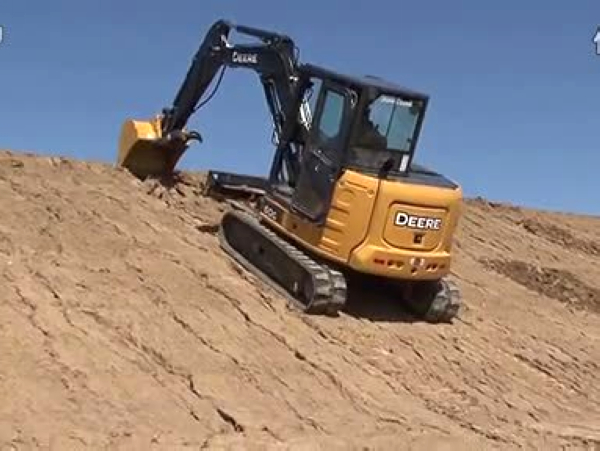
Uphill Operation
Before climbing, operators must fasten seat belts and carefully assess the slope. In general, slopes under 70 degrees with firm ground are negotiable, but real conditions should always be evaluated. If the slope is too steep, material can be moved from the upper section to reduce the angle.
When climbing, align the excavator directly with the slope to maintain balance. Small rocks should be cleared, as even minor obstacles may cause track slippage on steep terrain. Lowering the center of gravity is critical—keep the boom low, extend the arm forward, and position the bucket perpendicular to the slope to prevent sudden sliding.
When using the arm to assist climbing,
avoid releasing it too early. Keep the tracks rotating to allow material to
build up behind them, providing additional support. Near the slope crest,
continue gripping forward until the excavator is fully stable to prevent rear
rollover.
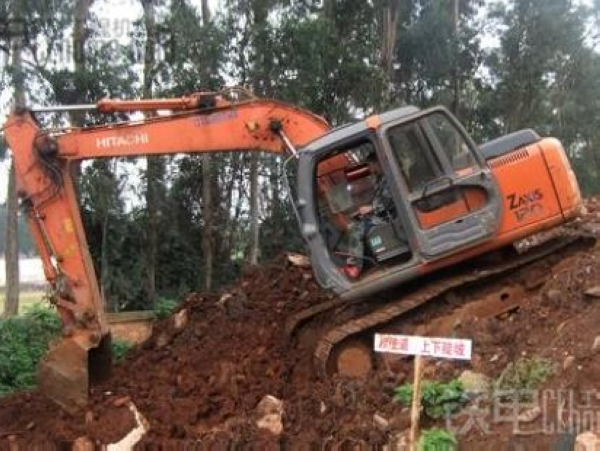
Downhill Operation
Downhill driving also emphasizes
center-of-gravity control. Always proceed slowly, avoid sharp turns, and ensure
the bucket touches the ground first to enhance stability and braking.
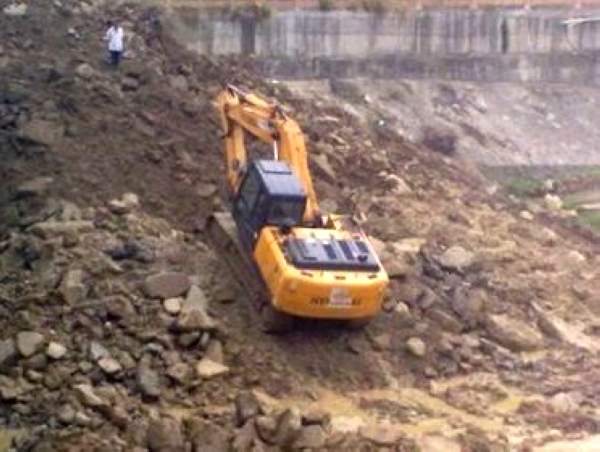
Mastering slope operation takes time, practice, and continuous learning. With experience and proper technique, operators can handle challenging terrain with confidence and safety.






+86-512-6929-1158
+86-512-6929-1158
+86-157-5556-5618
+86-135-6463-2264
Suite 705, Building 2, Tiandu Mansion, No. 211 Changjiang Road, High-tech Zone, Suzhou, Jiangsu Province, China


 Lifting Machinery
 Earthmoving Machinery
 Road Construction Machinery
 Concrete Machinery
 Truck & Special Vehicle
 Drilling Machinery
 Logistics Machinery
 Mining Machinery
 Agricultural Machinery
 Spare Parts
 Generator Set & Engine