


- Products
- News & Events
- Successful Cases
- Client Visit


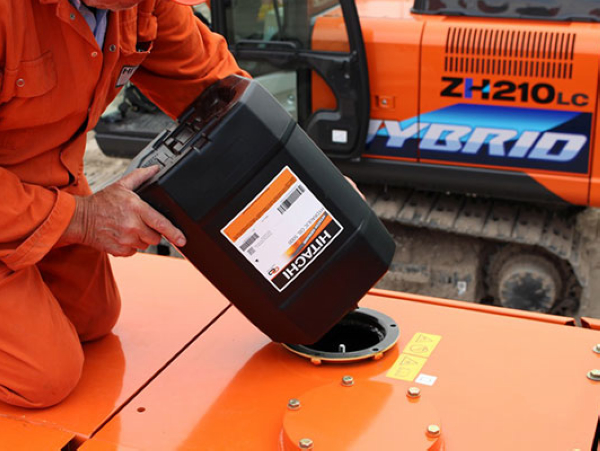
The service life of excavator hydraulic oil is typically4,000–6,000 operating hours, which means a complete oil change is usually required about once every two years. Unlike engine oil or gear oil, however, hydraulic oil replacement is far more complex. Only about50% of the total hydraulic oilis stored in the tank, while the rest remains in pipelines, pumps, valves, cylinders, and motors. Simply draining the tank results in old oil mixing with new oil, reducing performance and system reliability.
To achieve a truly thorough hydraulic oil replacement, proper preparation is essential. Required materials include hydraulic oil equal to approximately2.5 times the tank capacity, new filter elements, flushing oil, clean cloths, sealing plugs, ropes or chains, air pump, and empty oil drums.
The process begins by fully extending all hydraulic cylinders (boom, arm, and bucket) and shutting down the engine. The hydraulic tank is then drained, filters removed, and pipelines between the pump and tank disconnected. Both the tank and pipelines are flushed with cleaning oil, wiped clean, and fitted with new filters.
Next, the hydraulic pump must be cleaned by draining internal oil, repeatedly flushing the pump housing with cleaning oil, and finally refilling it with fresh hydraulic oil after drying with compressed air. All seals at the pump inlet must be replaced before reconnecting pipelines.
Hydraulic oil in cylinders and motors is replaced using the“new oil pushing out old oil”method. By selectively disconnecting oil lines and carefully operating the corresponding functions, old oil is expelled until clean oil flows out. This method applies to boom, arm, and bucket cylinders, as well as swing motors and travel motors.
Throughout the process, operators must strictly follow the sequence, operate only the intended functions, monitor oil color changes, and maintain proper oil levels. Any disconnected oil line must have its sealing ring replaced.
A complete hydraulic oil replacement, when done correctly, significantly improves system cleanliness, extends component life, and ensures stable, efficient excavator performance.







+86-512-6929-1158
+86-512-6929-1158
+86-157-5556-5618
+86-135-6463-2264
Suite 705, Building 2, Tiandu Mansion, No. 211 Changjiang Road, High-tech Zone, Suzhou, Jiangsu Province, China


 Lifting Machinery
 Earthmoving Machinery
 Road Construction Machinery
 Concrete Machinery
 Truck & Special Vehicle
 Drilling Machinery
 Logistics Machinery
 Mining Machinery
 Agricultural Machinery
 Spare Parts
 Generator Set & Engine